
When we started the first round of the A-ha! program, all anyone could see was a bright horizon of innovation and creation. And of course, innovation never ends, it just keeps right on moving – Seema Sueko of Mo'olelo Performing Arts Center has become a fixture on the “green theatre” circuit, the Playwrights Center is taking time to evaluate their trailers project, Theater Grottesco soldiers on in pursuit of an alternative capital campaign model, and Woolly Mammoth is reporting on their final sabbaticals.
But A-ha! is about more than brilliant success – it’s about the process, and the challenges. And between you and me, the process is what took all of us by surprise. With projects so exciting and groundbreaking, it’s hard to foresee any turbulence on the horizon, but of course, the challenges are the parts of the process that teach us, and stay with us… for better or for worse. If you happen to be joining us at the TCG National Conference, a few of our A-ha! veterans will be discussing these sticky, hair-pulling parts of innovation in the breakout session: Turning Failure into Opportunity: Navigating the Unexpected. It’s a brave group, and we hope to see you there. (And if you haven’t registered for the TCG National Conference, sign up now!)
Thank you for taking this first leg of the A-ha! journey with us. We look forward to sharing more stories with you!
Showing posts with label Woolly Mammoth. Show all posts
Showing posts with label Woolly Mammoth. Show all posts
Wednesday, May 12, 2010

Wednesday, March 31, 2010
Lessons from Air and Space
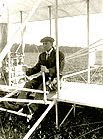
This week in A-ha!, Miriam Weisfeld from Woolly Mammoth (A-ha! Round 1) reflects on her sabbatical at the Smithsonian National Air and Space Museum, and how she ended up there in the first place.
Sabbatical at the Smithsonian National Air and Space Museum
Miriam Weisfeld
Director of New Play Development, Woolly Mammoth Theatre Company
Part 1:
Getting off the Ground
As Woolly Mammoth’s Director of New Play Development, I’ve long suspected parallels between my dramaturgical work and the work of curators and exhibit developers at the many museums that surround our theatre here in Washington. In July 2009, Woolly Mammoth co-hosted the annual Literary Managers and Dramaturgs of the Americas conference; we included a session called “Dramaturging the Museum” with representatives from the Newseum, the Smithsonian National Air and Space Museum (NASM), and the Folger Shakespeare Library. This fascinating conference session confirmed my instincts, and I called the Director of Exhibits at the Newseum to ask whether I might spend a sabbatical observing her work.
I was intrigued by the Newseum because their journalistic focus seemed particularly interesting from a dramaturgical perspective: journalists make constant choices about the authority, bias, and context of covering a story—surely these questions were central to the Newseum’s choices as well. And the Newseum was on the cutting edge of broadcast technology, with actual TV and radio studios embedded in the museum—an exciting way to see how electronic media can help shape a live narrative experience. I had lunch with the Newseum’s Director of Exhibits and we discovered a common passion to bring together stakeholders from DC’s various cultural institutions and provoke fresh exchanges.
But after a series of phone calls, emails, and meetings, the Director of Exhibits was unable to convince the Newseum’s administration to grant permission for me to observe her work. The administration’s concern was the blog you’re reading now: since I planned to document my observations on the TCG website, I might reveal plans for Newseum exhibits before the museum was prepared to release that information to the public. The Director of Exhibits sheepishly acknowledged the irony of a journalism museum squelching my First Amendment rights. But, she explained, the Newseum is a private corporation which depends on ticket sales to stay in business; therefore, the corporation closely guards their marketing and communications strategy.
Fired up by this challenge, I contacted Barbara Brennan, the Director of Exhibit Design at NASM. Soon I was sitting in her office, telling her about my frustrated attempt to collaborate with her counterpart at the Newseum. Barbara shook her head in surprise. She pointed out that when NASM exhibits are under construction on the museum floor, the safety barriers are deliberately kept low enough for visitors to watch the engineers installing and repairing aircraft or spacecraft. Sometimes, she said, engineers will take breaks to chat with the visitors about the new exhibits they’re assembling. The Smithsonian Museums, Barbara told me, “belong to the public,” and therefore seek to be transparent whenever possible.
Fortunately, Barbara also had a personal interest in trading information with me: she was originally trained as a theatrical set designer. I learned that one of her major accomplishments at NASM was an exhibit on the Wright Brothers that included performance spaces where actors playing Wilbur, Orville, and their sister to perform a miniature play for museum visitors. The exhibit was meant to be temporary, but its popularity won it a place in the museum’s permanent collection-- even after funds ran out to pay for actors and costumes for the play. Since then, Barbara had been itching to revisit performance in the museum space. We agreed I would spend a week exploring NASM, shadowing Barbara’s work, and brainstorming about connections between museums and theatres.
Part 2:
Friendly Skies
My first meeting at NASM felt a whole lot like season planning at Woolly Mammoth: I watched Barbara sit down with a photographer and a designer to discuss the rotation of temporary exhibits in NASM’s art gallery. For each show, they roughed out a budget for paint, lighting, and banners. Each exhibit, I learned, must be approved by the Public Programs Committee; in their pitches, designers must propose a strategy for funding each show. I told Barbara I was surprised by how immediately design planning became a budgeting task. She nodded, explaining that pairing donors with exhibits at a public museum could be a highly sensitive issue. For example, one artist had assembled a collection of NASM-related works and volunteered to pay to install them in NASM’s gallery himself. “Does that mean private artists are buying space here?” she asked.
This led us to a conversation about the weight of the Smithsonian’s perceived fairness and authority. Many exhibit developers, I learned, feel compelled to communicate a straightforward narrative that the museum’s partners—NASA, say, or even Boeing or Lockheed Martin—can approve. The range of stories told at NASM is also dictated in part by the collections the museum already owns. There have been many female aviators more accomplished than Amelia Earhart, Barbara pointed out. But the museum owns far more memorabilia of Earhart than of any other aviatrix—largely because Earhart so successfully cultivated her own celebrity status.
A theatre like Woolly Mammoth, on the other hand, enjoys a relative freedom to tell stories that deviate wildly from the “official” historical record—but is anyone listening? Woolly Mammoth will never have the number of visitors that NASM hosts every year. Is there a way for Woolly to be heard by more people, and for NASM to represent more unconventional voices? Barbara and I decided to talk more about narrative, performance, and audience with exhibit developers from other Smithsonian museums to get their perspectives.
A couple days later, Barbara and I hosted a pan-Smithsonian “brown bag lunch” for exhibit designers. The topic was “theatrical performance in exhibit space,” and we drew quite a crowd—I met representatives from the National Museum of the American Indian, the National Museum of Natural History, the Smithsonian Center for Education and Museum Studies, the Zoo, and two museum authorities from outside the Smithsonian Institute who also heard about the lunch and wanted to join. We traded stories about stage combat performances at an arms museum in Kentucky; a comedy sketch about composting at an antebellum plantation home; a puppet show about frogs at the zoo. Most performances were conceived for children and families, but Vincent Scott, a Program Specialist from the National Museum of the American Indian (NMAI), described intensive collaborations with sophisticated Native American theatres and performers.
We discovered that NMAI enjoyed an unusual degree of administrative support for performances—and this connected to the question of narrative authority. By devoting museum space to Native performers, NMAI allowed Native Americans to tell their own stories in their own voices rather than via Smithsonian curators. Vincent pointed out that this sometimes caused discomfort for visitors: a performance of the Thanksgiving story from a Native perspective, for example, contradicted the narrative that many visitors accepted as true. I wondered what kind of meta-theatrical framing NMAI had used to bridge this distance between performers and visitors. Vincent said program notes and discussions with the artists sometimes helped.
But even “theatre etiquette” was unfamiliar to many museum visitors; we hard complaints about noise, sightlines, cranky docents, and other barriers to performance in spaces not built for live actors. The duration of performances proved a universal challenge. Visitors often devote only a few minutes to each exhibit—particularly at Smithsonian Museums, which are free (“They get their money’s worth,” Barbara lamented). And then there was the cost of performers. Even when administrators agreed to incorporate live performance into exhibits, Equity rules often constrained live performance, webcasts, and other electronic means to reach a wider audience.
Despite these challenges, the exhibit designers all enthusiastically embraced the idea of theatrical collaborations. I asked how we could work together to overcome some of these challenges: could actors perform five or ten minute teasers of plays during the day that are performed in their entirety at the theatre in the evening? Could we keep in touch as we plan our seasons to coordinate plays and exhibits that commemorate the same historical events and social questions? Could we consciously use the theatre as a platform for the voices of diversity and dissent not always represented at the museums? Theatres could certainly grow by reaching museum visitors, but could performances actually diversify museum visitors? For example, could theatre help lure more women to science and engineering exhibits?
We talked about the International Museum/Theatre Alliance; a study of these collaborations by the University of Manchester; and other potential resources. The Smithsonian Commons, a new pan-Smithsonian website designed to share information across the Institution and among visitors, might help shake up the “burden on authority” and democratize museum narratives. We agreed to keep the conversation going and explore more concrete ways to work together.
Later, Barbara and I put together a mini-survey of follow-up questions to help us imagine next steps. I emailed this to the lunch participants:
Follow-up Survey
1) We discussed several challenges that face performances inside exhibit space: noise, cost, duration of the performance, visitors who lack “theatre etiquette.” Please list the major barriers you experience when trying to bring performance into exhibit space:
2) NASM sometimes presents lectures that aren’t an ideal fit for their IMAX theatre. Are there museum-related events that might fit better in a theatre space than a museum space? Could a downtown theatre like Woolly Mammoth be helpful in these cases?
3) Theatres plan most of their shows 1-2 years in advance; is there a way to coordinate this schedule with exhibit planning? What might be an effective model for sharing information about upcoming anniversaries, national, international, or environmental events that could inspire collaboration?
4) Are there perspectives and narratives that don’t always fit into a conventional exhibit? If you made a wish list of stories related to upcoming exhibits that you’d like to commission a playwright to create, what would be on it? (Dream big… maybe we can make it happen!)
Sabbatical at the Smithsonian National Air and Space Museum
Miriam Weisfeld
Director of New Play Development, Woolly Mammoth Theatre Company
Part 1:
Getting off the Ground
As Woolly Mammoth’s Director of New Play Development, I’ve long suspected parallels between my dramaturgical work and the work of curators and exhibit developers at the many museums that surround our theatre here in Washington. In July 2009, Woolly Mammoth co-hosted the annual Literary Managers and Dramaturgs of the Americas conference; we included a session called “Dramaturging the Museum” with representatives from the Newseum, the Smithsonian National Air and Space Museum (NASM), and the Folger Shakespeare Library. This fascinating conference session confirmed my instincts, and I called the Director of Exhibits at the Newseum to ask whether I might spend a sabbatical observing her work.
I was intrigued by the Newseum because their journalistic focus seemed particularly interesting from a dramaturgical perspective: journalists make constant choices about the authority, bias, and context of covering a story—surely these questions were central to the Newseum’s choices as well. And the Newseum was on the cutting edge of broadcast technology, with actual TV and radio studios embedded in the museum—an exciting way to see how electronic media can help shape a live narrative experience. I had lunch with the Newseum’s Director of Exhibits and we discovered a common passion to bring together stakeholders from DC’s various cultural institutions and provoke fresh exchanges.
But after a series of phone calls, emails, and meetings, the Director of Exhibits was unable to convince the Newseum’s administration to grant permission for me to observe her work. The administration’s concern was the blog you’re reading now: since I planned to document my observations on the TCG website, I might reveal plans for Newseum exhibits before the museum was prepared to release that information to the public. The Director of Exhibits sheepishly acknowledged the irony of a journalism museum squelching my First Amendment rights. But, she explained, the Newseum is a private corporation which depends on ticket sales to stay in business; therefore, the corporation closely guards their marketing and communications strategy.
Fired up by this challenge, I contacted Barbara Brennan, the Director of Exhibit Design at NASM. Soon I was sitting in her office, telling her about my frustrated attempt to collaborate with her counterpart at the Newseum. Barbara shook her head in surprise. She pointed out that when NASM exhibits are under construction on the museum floor, the safety barriers are deliberately kept low enough for visitors to watch the engineers installing and repairing aircraft or spacecraft. Sometimes, she said, engineers will take breaks to chat with the visitors about the new exhibits they’re assembling. The Smithsonian Museums, Barbara told me, “belong to the public,” and therefore seek to be transparent whenever possible.
Fortunately, Barbara also had a personal interest in trading information with me: she was originally trained as a theatrical set designer. I learned that one of her major accomplishments at NASM was an exhibit on the Wright Brothers that included performance spaces where actors playing Wilbur, Orville, and their sister to perform a miniature play for museum visitors. The exhibit was meant to be temporary, but its popularity won it a place in the museum’s permanent collection-- even after funds ran out to pay for actors and costumes for the play. Since then, Barbara had been itching to revisit performance in the museum space. We agreed I would spend a week exploring NASM, shadowing Barbara’s work, and brainstorming about connections between museums and theatres.
Part 2:
Friendly Skies
My first meeting at NASM felt a whole lot like season planning at Woolly Mammoth: I watched Barbara sit down with a photographer and a designer to discuss the rotation of temporary exhibits in NASM’s art gallery. For each show, they roughed out a budget for paint, lighting, and banners. Each exhibit, I learned, must be approved by the Public Programs Committee; in their pitches, designers must propose a strategy for funding each show. I told Barbara I was surprised by how immediately design planning became a budgeting task. She nodded, explaining that pairing donors with exhibits at a public museum could be a highly sensitive issue. For example, one artist had assembled a collection of NASM-related works and volunteered to pay to install them in NASM’s gallery himself. “Does that mean private artists are buying space here?” she asked.
This led us to a conversation about the weight of the Smithsonian’s perceived fairness and authority. Many exhibit developers, I learned, feel compelled to communicate a straightforward narrative that the museum’s partners—NASA, say, or even Boeing or Lockheed Martin—can approve. The range of stories told at NASM is also dictated in part by the collections the museum already owns. There have been many female aviators more accomplished than Amelia Earhart, Barbara pointed out. But the museum owns far more memorabilia of Earhart than of any other aviatrix—largely because Earhart so successfully cultivated her own celebrity status.
A theatre like Woolly Mammoth, on the other hand, enjoys a relative freedom to tell stories that deviate wildly from the “official” historical record—but is anyone listening? Woolly Mammoth will never have the number of visitors that NASM hosts every year. Is there a way for Woolly to be heard by more people, and for NASM to represent more unconventional voices? Barbara and I decided to talk more about narrative, performance, and audience with exhibit developers from other Smithsonian museums to get their perspectives.
A couple days later, Barbara and I hosted a pan-Smithsonian “brown bag lunch” for exhibit designers. The topic was “theatrical performance in exhibit space,” and we drew quite a crowd—I met representatives from the National Museum of the American Indian, the National Museum of Natural History, the Smithsonian Center for Education and Museum Studies, the Zoo, and two museum authorities from outside the Smithsonian Institute who also heard about the lunch and wanted to join. We traded stories about stage combat performances at an arms museum in Kentucky; a comedy sketch about composting at an antebellum plantation home; a puppet show about frogs at the zoo. Most performances were conceived for children and families, but Vincent Scott, a Program Specialist from the National Museum of the American Indian (NMAI), described intensive collaborations with sophisticated Native American theatres and performers.
We discovered that NMAI enjoyed an unusual degree of administrative support for performances—and this connected to the question of narrative authority. By devoting museum space to Native performers, NMAI allowed Native Americans to tell their own stories in their own voices rather than via Smithsonian curators. Vincent pointed out that this sometimes caused discomfort for visitors: a performance of the Thanksgiving story from a Native perspective, for example, contradicted the narrative that many visitors accepted as true. I wondered what kind of meta-theatrical framing NMAI had used to bridge this distance between performers and visitors. Vincent said program notes and discussions with the artists sometimes helped.
But even “theatre etiquette” was unfamiliar to many museum visitors; we hard complaints about noise, sightlines, cranky docents, and other barriers to performance in spaces not built for live actors. The duration of performances proved a universal challenge. Visitors often devote only a few minutes to each exhibit—particularly at Smithsonian Museums, which are free (“They get their money’s worth,” Barbara lamented). And then there was the cost of performers. Even when administrators agreed to incorporate live performance into exhibits, Equity rules often constrained live performance, webcasts, and other electronic means to reach a wider audience.
Despite these challenges, the exhibit designers all enthusiastically embraced the idea of theatrical collaborations. I asked how we could work together to overcome some of these challenges: could actors perform five or ten minute teasers of plays during the day that are performed in their entirety at the theatre in the evening? Could we keep in touch as we plan our seasons to coordinate plays and exhibits that commemorate the same historical events and social questions? Could we consciously use the theatre as a platform for the voices of diversity and dissent not always represented at the museums? Theatres could certainly grow by reaching museum visitors, but could performances actually diversify museum visitors? For example, could theatre help lure more women to science and engineering exhibits?
We talked about the International Museum/Theatre Alliance; a study of these collaborations by the University of Manchester; and other potential resources. The Smithsonian Commons, a new pan-Smithsonian website designed to share information across the Institution and among visitors, might help shake up the “burden on authority” and democratize museum narratives. We agreed to keep the conversation going and explore more concrete ways to work together.
Later, Barbara and I put together a mini-survey of follow-up questions to help us imagine next steps. I emailed this to the lunch participants:
Follow-up Survey
1) We discussed several challenges that face performances inside exhibit space: noise, cost, duration of the performance, visitors who lack “theatre etiquette.” Please list the major barriers you experience when trying to bring performance into exhibit space:
2) NASM sometimes presents lectures that aren’t an ideal fit for their IMAX theatre. Are there museum-related events that might fit better in a theatre space than a museum space? Could a downtown theatre like Woolly Mammoth be helpful in these cases?
3) Theatres plan most of their shows 1-2 years in advance; is there a way to coordinate this schedule with exhibit planning? What might be an effective model for sharing information about upcoming anniversaries, national, international, or environmental events that could inspire collaboration?
4) Are there perspectives and narratives that don’t always fit into a conventional exhibit? If you made a wish list of stories related to upcoming exhibits that you’d like to commission a playwright to create, what would be on it? (Dream big… maybe we can make it happen!)
Thursday, March 4, 2010
Whole People. Whole Planet. With pictures!
This week, an update from Woolly Mammoth (of Round 1 fame). Aaron Heinsman spends some time with the Whole Planet Foundation, re-ignites a passion for development (truth!), and reminds us that transparency is not always as easy as it sounds.


Whole People. Whole Planet.
Annual Fund Director Aaron Heinsman here, reminiscing on Day 7 of last summer’s Texas Adventure.
I had just spent 5 days in San Antonio for the annual Tessitura Learning & Community Conference, cramming my brain full of new tips for effectively harnessing and exploiting the power of our integrated donor/ticketing software and meeting, networking, and befriending fellow arts professionals in multiple disciplines from seven countries on three continents.
Austin: Texas’ proud capital city and a blue bastion in a red state. I had hoped to be spending a week with the amazingly dedicated five-member team of the Whole Planet Foundation—the philanthropic arm of Whole Foods dedicated to raising communities, specifically those which source their products, out of poverty through microlending. It’s corporate philanthropy in perhaps its purest form: driven by the core values of its parent company with little emphasis on tax benefits, visibility from its beneficiaries, or the bottom line. Beyond that, both Whole Foods and Woolly Mammoth are celebrating their 30th year of operations and both are still led by the extraordinary vision and dedication of our respective founders, a synergetic coincidence.
Due to the small nature of the Foundation’s staff and the fact that they are more often than not in the field seeking out more communities and opportunities for support, I was only able to have an informational meeting with Joy Peterson, their Director of Partnership Development & Internal Programs.
That said, while my visit was too brief to yield specific innovative ideas, what it did serve to do—particularly coming on the heels of my time in San Antonio—was serve to reactivate my enthusiasm for the actual work of development. Yes, at its root, development is fundraising. But the funds cannot be raised without having created some form of relationship first. And it is this—the nurturing of deep, highly engaged and personal connections with our patron-funders—which I felt both eloquently reminded of during my conversation with Joy and also validated. We shared a few stories of where we’re headed as people-driven organizations and realized that we’re on the right track. We agreed that to succeed you need to be true to a genuine, yet dynamic mission and, more importantly, have an energized base. For Whole Planet and Woolly Mammoth to continue to thrive and succeed in the long run, we have to have real, actual stakeholders, whether they are vendors, team members, and customers or donors, artists, and patrons.
If I got this much out of a single morning, I can’t wait to discover what a whole week will yield…which has proven quite tricky! I’ve made three concentrated efforts at sabbatical placement since whetting my appetite in San Antonio. One was to a major national foundation highly supportive of theatre, and the other two were to large regional banks with operations in the Baltimore/Washington area. All three organizations are ones where I have professional connections. And yet, and yet…no one seems quite willing to let me inside to view their operations and, hopefully even, assist them practically speaking. Transparency is such a difficult thing for organizations to embrace. But I haven’t give up!
Stay tuned for more tales from Woolly folks….


Wednesday, August 5, 2009
Notes from a Woolly Sabbatical
Tim Plant, Woolly Mammoth's Development Director, blogs his sabbatical experience:
My Aha! sabbatical experience thus far has been nothing short of fantastic. Thanks to the help of a Woolly Mammoth Board member to make the introduction, and the wonderful willingness of their staff, I’ve started my sabbatical at the Sidwell Friends School in Washington, DC. My desire to learn from Sidwell Friends was simple – it’s recognized as one of the preeminent private schools in the country and the reputation of their Development team is well-known in the city.
Any nervousness I felt the first day (I hope it didn’t show) did not last for long. Mainly because we headed into meetings and didn’t look back from there. I’ve been shadowing Assistant Head of School for Institutional Advancement Patty Carocci and she’s allowed me to sit in on meetings ranging from how to use the database to track events, to planning for the next alumni magazine issue, to reviewing fiscal year-end plans. Her willingness to let me see how she manages every aspect of her job has been tremendous. Her responsibilities are obviously broader in scope than my position at Woolly (her staff is much larger than Woolly’s development team of three) so watching her manage the different parts has been instructive in how to handle my various responsibilities.
The rest of the Development team has also been incredibly generous with their time, whether it’s Leslie showing me all the reports used to track Annual Fund progress, or Lauren spending an hour sharing her experiences running the Sidwell Friends events. I truly feel like a sponge trying to soak up as much information, advice, and knowledge as I can.
The best part of the experience so far – and the hardest to convey – is the excitement that builds during my time there. I want to recreate Leslie’s “Yield” report, and look into adding an online portion of our auction similar to what Lauren described. And I want to do it today. On Monday, I posed a challenge I face in my job to Patty and she said, “Ok, we’re going to figure this out.” That willingness to dive into my work and share her experience is exactly what I hoped to gain from my time at Sidwell Friends. I’m going to be very sad indeed when my time visiting there is done. Thankfully, that’s not yet!
Thursday, June 11, 2009
Woolly Mammoth: If at First...
As we all know, things don’t always go according to plan, no matter how perfect an idea seems. Washington, D.C.’s Woolly Mammoth has been working hard on sending staff members out on their Aha! sabbaticals, which has proven to be more challenging than anticipated. Woolly’s Aaron Heinsman goes into detail…
At Woolly, literally everyone can have an impact on the art. So it seemed a no-brainer for us to send each of our full-time staff members out into the wider world to do a working sabbatical to glean new ideas and pick-up best practice insights at operations perhaps outside the regular purview of our theatrical network.
Easier said than done! It's proved especially challenging for us to arrange our sabbaticals, as we're attempting to reach out to new companies and organizations where we don't necessarily already have a relationship. But sadly opening these doors has not been as easy as we hoped. While there is enthusiasm for the program's concept, not everyone is willing or able to house one of our staffers. But the Woolly spirit is to keep trying until we figure it out!
And now the good news: we've gotten our first placement secured! Development Director Tim Plant is going back to school, and in this case he'll be in some pretty good company at DC's Sidwell Friends School. He'll glean some ideas and best practices for keeping alumni and their families connected to an organization long after the immediate relationship ends. This is particularly compelling for the Washington arts scene as the District frequently has a sizable residential turnover with each majority swing. Can a modestly sized theater -- where so much of the connection of patrons involves them actually experiencing our plays -- keep donor relationships going once they're not attending regularly or even still in the region? An intriguing question, and one we hope we'll soon be able to successfully answer affirmatively.
As for the rest of the staff, people are FIRED UP to get out there this summer, particularly as our colossal Season 30 will be soon upon us! Our props master wants to get her hands dirty at an FX house, our operations/company manager wants to see how the talent is managed at the D.C. United football club, and I am hoping to observe corporate philanthropy in action at the Whole Foods Foundation in Austin. Fingers crossed!
At Woolly, literally everyone can have an impact on the art. So it seemed a no-brainer for us to send each of our full-time staff members out into the wider world to do a working sabbatical to glean new ideas and pick-up best practice insights at operations perhaps outside the regular purview of our theatrical network.
Easier said than done! It's proved especially challenging for us to arrange our sabbaticals, as we're attempting to reach out to new companies and organizations where we don't necessarily already have a relationship. But sadly opening these doors has not been as easy as we hoped. While there is enthusiasm for the program's concept, not everyone is willing or able to house one of our staffers. But the Woolly spirit is to keep trying until we figure it out!
And now the good news: we've gotten our first placement secured! Development Director Tim Plant is going back to school, and in this case he'll be in some pretty good company at DC's Sidwell Friends School. He'll glean some ideas and best practices for keeping alumni and their families connected to an organization long after the immediate relationship ends. This is particularly compelling for the Washington arts scene as the District frequently has a sizable residential turnover with each majority swing. Can a modestly sized theater -- where so much of the connection of patrons involves them actually experiencing our plays -- keep donor relationships going once they're not attending regularly or even still in the region? An intriguing question, and one we hope we'll soon be able to successfully answer affirmatively.
As for the rest of the staff, people are FIRED UP to get out there this summer, particularly as our colossal Season 30 will be soon upon us! Our props master wants to get her hands dirty at an FX house, our operations/company manager wants to see how the talent is managed at the D.C. United football club, and I am hoping to observe corporate philanthropy in action at the Whole Foods Foundation in Austin. Fingers crossed!
Thursday, April 2, 2009
Meet Woolly Mammoth
It’s a story every theatre practitioner knows by heart: scrappy company of artists with a daring approach to art sets out to change the world, scrappy company encounters success and makes some money, scrappy company hires a few staff members, scrappy company buys a building… and suddenly scrappy company’s daring approach to the art form is in jeopardy.
Sadly, this story usually ends with a slow, steady drift away from the company’s core values. But Washington, D.C.-based Woolly Mammoth is determined not to let success get in the way of a good thing.
Woolly Mammoth’s Think It grant is intended to stimulate creative thinking among the Woolly Mammoth staff – by giving them all time off. Every staff member will be taking one- to two-week paid sabbaticals, and shadowing someone who works in another profession. Staff members hope to return to the theatre with new ideas, new energy, new approaches, and new relationships and inroads into audience and donor bases.
Not every theatre company would have zeroed in on staff members as key players in the company’s continued commitment to innovation. But Woolly Mammoth is interested in integrating new ideas at every level of the company. Woolly Mammoth wants to ensure that the cutting-edge thinking they bring to the plays they produce gets translated to staff members. Check back as these sabbaticals take shape – we’ll be talking about what worked, and what didn’t work.
Subscribe to:
Posts (Atom)

 Posts
Posts

